
The General Soft Drinks Co. Ltd. (GSD) is one of Malta’s leading beverage producers and distributors, supplying soft drinks across retail, convenience, hospitality, and on-the-go channels. As part of its commercial operations, GSD owns and manages an extensive in-market fleet of plug-in beverage coolers installed within customer outlets to support the chilling, display, and merchandising of its product portfolio at the point of sale.
This operating model creates a commercially significant value-chain dynamic. While GSD assumes full responsibility for the capital investment, maintenance, and lifecycle management of the refrigeration equipment, the host outlets bear the electricity costs associated with operating the units. Consequently, strategic decisions taken by GSD regarding cooler specification, refrigerant selection, and equipment sizing directly influence the operational costs, indoor heat load, and refrigerant-related environmental impact experienced by hundreds of independent businesses downstream.
In response to these considerations, GSD launched a phased refrigeration renewal programme aimed at replacing legacy beverage coolers with a new generation of energy-efficient and environmentally responsible units designed around two core principles:
Across the 2025 and 2026 implementation phases, the Programme has already renewed approximately 30% of GSD’s in-market HFC/Legacy cooler fleet, with the 2026 phase expanding further on the initial rollout. The cooler replacement programme is not structured as a one-time project, but as a continuous annual renewal process. Legacy coolers are retired gradually based on refrigerant type, energy performance, age, condition, operational feasibility and business need. This approach allows GSD to align replacements with the natural end-of-life cycle of existing equipment, while progressively improving fleet efficiency, reducing reliance on high-GWP refrigerants and optimising supplier and operational learnings year on year.
A defining principle of the Programme is that energy efficiency at the point of sale is approached not merely as a standalone technical improvement, but as a strategic value-chain commitment by GSD towards its retail and HoReCa partners and, more broadly, towards Malta’s national energy and climate objectives.
Prior to the implementation of the Programme, GSD’s in-market refrigeration fleet consisted of a large and diverse base of plug-in beverage coolers accumulated over multiple product cycles and supplier generations. The fleet was (and, within the remaining legacy portion, continues to be) heterogeneous in terms of age, capacity, supplier origin, and operational condition, a profile characteristic of supplier-owned and geographically dispersed commercial refrigeration assets.
Three key structural characteristics defined the AS-IS state of the fleet:
Although many legacy refrigeration units may still functional, they are being progressively replaced with more energy-efficient and lower-GWP alternatives. These older units mainly contain HFC refrigerants such as R134a, with a smaller number containing R404A. All replaced units are channeled through ERA approved waste collectors under the Extended Producer Responsibility framework to ensure proper recovery, treatment and environmentally sound disposal.
These refrigerants present both environmental and regulatory challenges. In addition to their high direct-emission impact in cases of leakage, servicing, or end-of-life disposal, they are increasingly exposed to regulatory restrictions associated with the EU’s HFC phase-down trajectory under the F-Gas framework.
Most legacy units were deployed prior to the introduction of the EU Ecodesign Regulation for refrigerating appliances with a direct sales function. Furthermore, the ageing condition of the equipment has contributed to a further decline in real-world operational performance. Common issues such as degraded door seals, ageing condensers, worn compressor systems, and inefficient fan motors are typical across refrigeration assets of this generation.
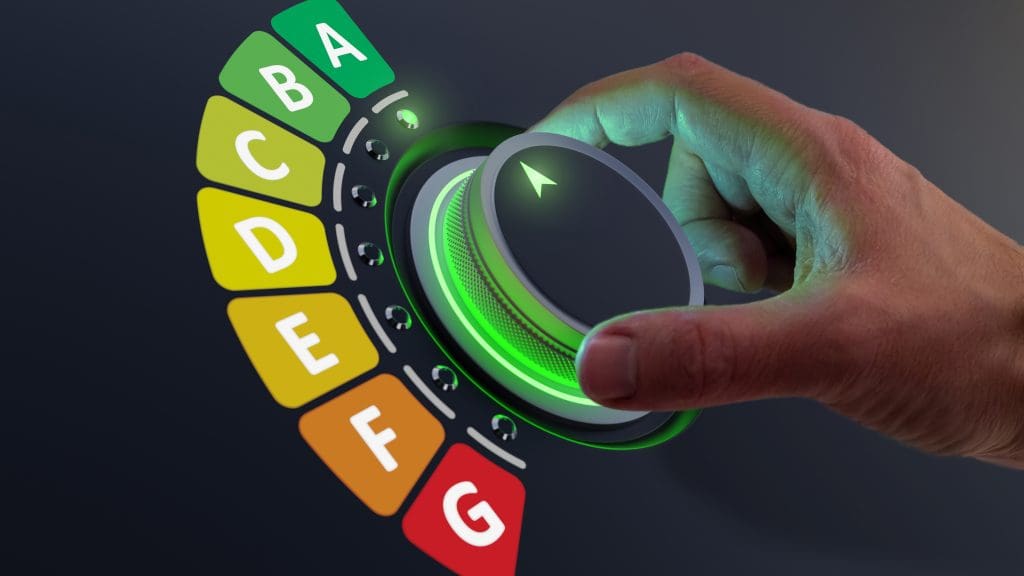
Based on equipment type, age, and operational characteristics, the majority of the legacy fleet is best classified as equivalent to Energy Class C or below under the current EU energy labelling framework. According to the European Commission, a Class C refrigeration appliance may consume over 50% more electricity than a comparable Class A unit.
As is common within supplier-owned distributed refrigeration fleets, GSD does not currently possess directly metered electricity consumption data for individual legacy units installed at customer premises. Since host outlets are responsible for electricity costs and appliances are not separately sub-metered, the baseline energy performance of the legacy fleet must be estimated using EU reference benchmarks, equipment age, and technical specifications.
This lack of direct visibility further highlights the structural inefficiencies associated with older refrigeration fleets. For context, the European Commission estimates that EU-wide electricity consumption from commercial refrigeration equipment is expected to decrease by approximately 64% between 1990 and 2030 as a result of Ecodesign and Energy Labelling measures, underlining the comparatively high energy intensity of pre-Ecodesign equipment such as much of GSD’s legacy fleet.
Collectively, these factors resulted in a refrigeration fleet that, in its AS-IS state, was energy-intensive, refrigerant-exposed, and largely unmonitored – three interconnected challenges that the Programme was specifically designed to address simultaneously.
The Programme reshapes interactions across the beverage value chain in four distinct and interconnected ways.
GSD now procures refrigeration equipment through a curated panel of suppliers selected against a shared technical specification encompassing energy efficiency, refrigerant type, suitability for Malta’s climatic conditions, servicing capability, warranty provisions, and end-of-life take-back arrangements.
By embedding these requirements at procurement stage, GSD shifts supplier engagement away from a purely capital-cost-driven model towards a lifecycle-performance approach focused on long-term operational efficiency and sustainability. This also sends a clear market signal regarding the technical and environmental standards expected across the supply chain.
The phased replacement strategy allows GSD’s logistics, technical service, and field-sales teams to coordinate equipment deployment in a structured manner rather than relying on reactive replacement triggered by breakdowns or end-of-life failure.
This coordinated approach supports the efficient placement of new units, collection and reverse logistics of retired equipment, certified recovery and treatment of legacy refrigerants in compliance with F-Gas obligations, and recycling of refrigeration cabinet materials. As a result, refrigeration management evolves from a reactive maintenance activity into a structured asset-renewal programme with benefits including improved operational predictability, enhanced service quality, and stronger regulatory compliance.
The downstream value-chain impact is particularly significant. Each newly installed refrigeration unit delivers recurring reductions in electricity consumption and indoor heat load for the host outlet at no capital cost to the business itself.
For SMEs operating beverage coolers continuously, the replacement of a legacy pre-Ecodesign Class C unit with a modern Ecodesign-compliant model can reduce annual unit-level electricity consumption by approximately 40–60%. Although many outlets may not directly attribute reduced electricity costs to the refrigeration upgrade, the operational savings remain tangible, recurring, and measurable at scale across the network.
At a national level, the Programme also contributes to Malta’s wider energy and climate objectives. Given Malta’s relatively small and partially interconnected electricity system, every kilowatt-hour saved at the retail point of sale translates directly into avoided electricity generation, reduced energy imports, and lower associated emissions in alignment with Malta’s National Energy and Climate Plan commitments.
Simultaneously, the replacement of legacy HFC refrigerants with natural refrigerants significantly reduces the stock of high-GWP refrigerants within Malta’s commercial refrigeration inventory, supporting both national F-Gas reporting obligations and the EU-wide HFC phase-down strategy.
Following implementation, the renewed portion of GSD’s refrigeration fleet is characterised by three defining attributes that collectively represent a generational transition in the company’s downstream refrigeration infrastructure.
All refrigeration units introduced under the Programme carry verified daily energy-consumption ratings based on EU-traceable manufacturer documentation. When benchmarked against pre-2021 commercial refrigeration equipment used as a proxy for the legacy fleet, the renewed units are expected to achieve electricity consumption reductions in the region of 45–60% on a like-for-like basis.
All new refrigeration units operate using natural hydrocarbon refrigerants (specifically R600a and R290) both of which possess a Global Warming Potential (GWP) of ≤3. These refrigerants replace predominantly R134a-based legacy systems (GWP ≈ 1,430), resulting in a reduction of more than 99.9% in the direct climate impact associated with the refrigerant charge on a per-kilogram basis.
In aggregate terms, the removal of high-GWP refrigerants from the renewed fleet represents a significant reduction within Malta’s commercial refrigeration refrigerant inventory, particularly when accounting for the higher leakage risks typically associated with ageing equipment.
Traceability and Reportability
Each new refrigeration unit corresponds to a model with verifiable energy performance and refrigerant specifications, enabling the creation of a structured digital baseline for GSD’s refrigeration operations.
For the first time, this provides GSD with the ability to benchmark, prioritise, and sequence the replacement of the remaining in-market fleet using credible performance data, while also strengthening the company’s ability to report transparently on refrigeration-related sustainability impacts and year-on-year improvements.

Conclusion
The Programme demonstrates how a brand owner can play a transformative role in improving energy efficiency across an extensive network of small businesses, delivering operational and environmental benefits that individual outlets may not have had the technical capacity, scale, or financial resources to achieve independently.
Several key aspects of the initiative stand out as particularly relevant for future REEValue case studies and broader value-chain sustainability strategies.
Firstly, the Programme successfully addresses a longstanding structural imbalance within the beverage value chain. In most commercial arrangements, the brand owner procures and owns the refrigeration equipment, while the host outlet assumes responsibility for the associated electricity costs. In the absence of coordinated intervention, this dynamic often results in procurement decisions being driven primarily by upfront capital cost rather than long-term operational efficiency. By centralising the decision-making process, GSD ensures that refrigeration investments are guided by the stakeholder best positioned to evaluate lifecycle performance, technical suitability, and long-term sustainability outcomes.

Secondly, the Programme integrates energy efficiency, refrigerant transition, and fleet renewal into a single coordinated strategy rather than treating them as separate operational priorities. The transition to natural refrigerants, the deployment of Ecodesign-compliant equipment, and the optimisation of refrigeration capacity collectively reinforce one another, resulting in a refrigeration fleet that is both operationally more efficient today and strategically better positioned for future EU regulatory developments.
A further strategic benefit lies in the establishment of a structured and traceable data foundation. Each newly deployed refrigeration unit is linked to verifiable energy-performance and refrigerant data, enabling GSD to build a credible baseline for monitoring, benchmarking, and reporting refrigeration-related environmental impacts across its operations. This capability is expected to become increasingly important within the evolving landscape of EU sustainability disclosure requirements, particularly under the Corporate Sustainability Reporting Directive (CSRD) and related reporting frameworks.
Importantly, the benefits generated by the Programme extend simultaneously across multiple stakeholder groups. Retail and HoReCa partners benefit from recurring reductions in electricity consumption and operating costs without requiring direct capital investment. Malta’s energy system benefits from reduced electricity demand at the point of sale, lower associated emissions, and a reduction in high-GWP refrigerants within the national inventory, supporting the objectives of Malta’s National Energy and Climate Plan. At the same time, GSD has established a scalable and replicable refrigeration-management model that can continue to be expanded across the remainder of its in-market fleet and integrated into future sustainability-driven refrigeration initiatives.
Για περισσότερες πληροφορίες ή βοήθεια, παρακαλούμε συνδεθείτε μαζί μας στο LinkedIn REEValue ή ακολουθήστε μας στο Twitter