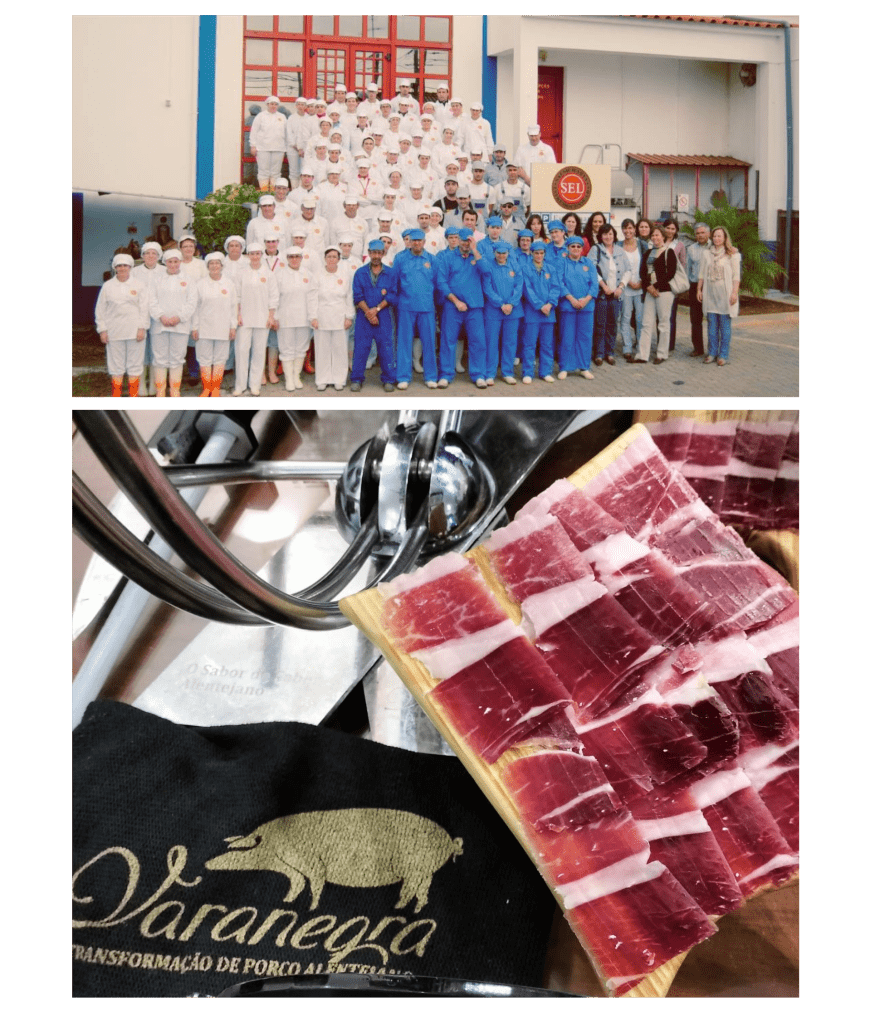
A Salsicharia Estremocense, S.A. (SEL), headquartered in Estremoz, specialises in meat processing and charcuterie products. Founded in 1984, SEL is dedicated to the production of fresh and frozen meats, cured ham, and related products. The company promotes sustainability by improving energy efficiency, expanding the use of renewable energy, reducing emissions, and strengthening its commitment to sustainability.
SEL pursues a long-term sustainability strategy focused on three primary objectives: reducing energy intensity, increasing renewable energy generation, and enhancing production system efficiency. This approach enables the company to achieve industrial growth while delivering measurable reductions in both energy consumption and CO₂ emissions.
Three Pillars of Sustainability:
SEL’s commitment extends beyond direct energy savings, encompassing the entire value chain of industrial food production. By integrating large-scale photovoltaic self-consumption into its operations, SEL reduces dependency on the grid.
Simultaneously, the company is boosting efficiency in refrigeration, compressed air, lighting, and thermal systems, driving down resource use per tonne of product. Digital energy monitoring, predictive maintenance, and gradual fleet electrification are also part of SEL’s roadmap, providing greater control over energy use and enhancing long-term competitiveness.
In thermal processes, biomass boilers fueled by pellets, olive pits, and almond shells further reduce fossil fuel dependence.
Looking to the future, SEL plans to explore battery storage, advanced refrigeration optimisation, and trigeneration to push emissions and energy costs even lower. Through the REEValue initiative, SEL showcases how SMEs in the agri-food sector can align industrial growth with practical decarbonisation strategies and tangible improvements in energy performance.
For more information or assistance, please connect with us on LinkedIn REEValue or follow us on Twitter